Quarterly or Semiannual Facility Inspections: How to Choose a Cadence
The right inspection schedule depends on how hard the building works, and the findings only matter if someone sorts them.
October 16, 2026 · 4 min read
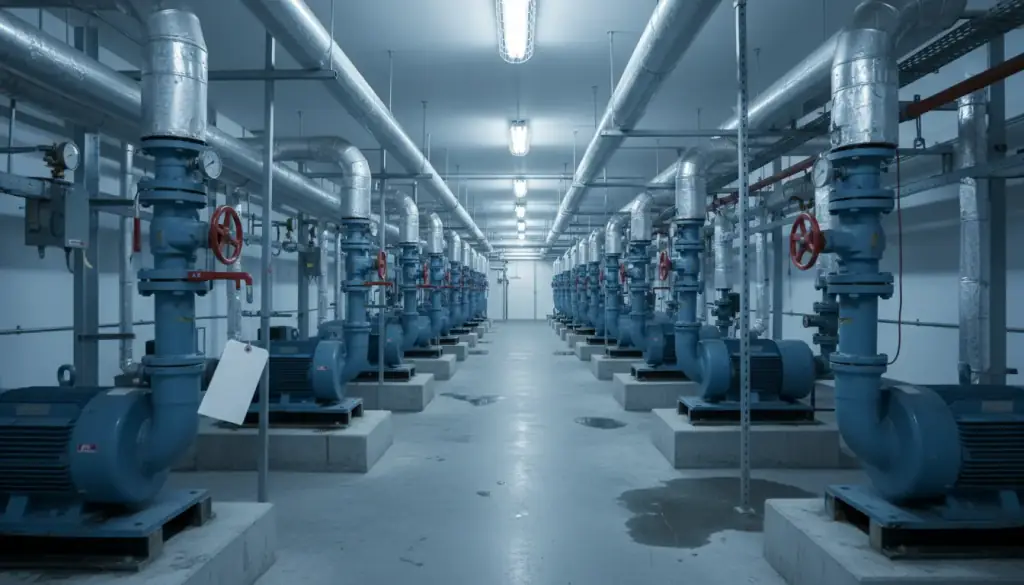
Ask five facility managers how often a building should be inspected and you will get five answers, most of them shaped by whatever went wrong last year. A walk-through that happens only after a failure is not an inspection program. It is a post-mortem. For most commercial buildings the real choice comes down to two cadences, quarterly and semiannual, and the right one depends on how hard the building is working, not on what the budget line happened to be last cycle.
What each cadence is built for
Quarterly inspections suit buildings that take a beating. That means heavy foot traffic, long operating hours, or tenants and customers who notice the moment something is off. It also means complex mechanical systems, where a drifting setpoint or a worn belt can turn into a shutdown between visits, and any property where downtime costs enough that you would rather find a problem in week eight than in week twenty-six. Four visits a year gives you a short feedback loop. A slow leak at a roof penetration gets caught within one season instead of two, and the stain on the ceiling tile never becomes a section of missing drywall.
Semiannual inspections fit lower-traffic, stable buildings that already run an established maintenance program. If filters are changed on schedule, the roof has been looked at recently, and the equipment is nowhere near the end of its life, two visits a year often catches what matters. A common pattern is one visit ahead of heating season and one ahead of cooling season. The longer interval is not a way to save a trip. It is a way to match the pace at which that particular building actually changes.
Questions that settle the choice
When a manager is stuck between the two, these questions usually break the tie.
- How many people use the building on a normal day, and how quickly would they report a problem?
- How old is the mechanical equipment, and does anyone track its service history in one place?
- What does an unplanned closure cost you in a single day, in lost revenue, tenant goodwill, or both?
- Has the building had water intrusion, electrical trips, or repeat comfort complaints in the last twelve months?
- Is a maintenance program running between inspections, or is the inspection the only scheduled touch?
If the answers lean toward high use, aging equipment, or no program between visits, quarterly is the safer call. If the building is stable, lightly used, and already well looked after, semiannual is a reasonable fit. Mixed answers are common, and in that case it is fine to start quarterly and loosen the schedule once the findings quiet down.
What a useful inspection actually covers
A walk-through that only looks at the rooftop units is half an inspection. A full one covers HVAC and mechanical equipment, electrical systems and visible wiring, plumbing fixtures and any water concerns, interiors such as ceilings, walls and flooring, exterior conditions including access points and drainage, and life-safety observations. Many of the best catches are small: a ceiling tile with a faint stain, a door that no longer latches cleanly, a downspout dumping water against the foundation, a panel cover that is not seated. None of those is an emergency by itself. All of them are cheaper to deal with while they are still small.
Sorting the findings so something happens
The part most buildings skip is what happens after the walk. A list of forty observations with no order tends to sit in an inbox until the next problem pushes it down. Resolute Facilities Solutions documents inspection findings and prioritizes them by risk and urgency, then sorts the summary into four groups: immediate attention, monitor, recommended repairs, and prevention.
That sorting is the useful part. Immediate attention is what you act on this week. Monitor is what you photograph and recheck at the next visit, so a hairline crack or a slightly warm return air reading gets a trend line instead of a guess. Recommended repairs go into planning and budget with a clear reason attached. Prevention is the change in routine that keeps the same finding from coming back, such as a filter schedule, a gutter cleaning, or a door closer adjustment.
Whichever cadence you choose, ask for the same four groups from whoever does the work. Comparing one visit's list to the last one tells you whether the building is improving or just getting older, and it gives you something concrete to show an owner or a board when they ask why a repair is on the budget.
Pick a starting point, then adjust
You do not have to get this right on the first try. Plenty of managers begin quarterly for the first year to build a baseline, then move to semiannual once the findings settle and the monitor list is short. Others go the other direction after a surprise failure. Both are reasonable. What matters is that the cadence is a decision made on purpose and written down, not a default inherited from the last property manager.
If you are weighing the two for a specific building and want a second set of eyes, Resolute Facilities Solutions offers free estimates. Call or text 833-588-5286, or send the details through the contact page and Brandon's team will take it from there.
Resolute Facilities Solutions, 833-588-5286
Call 833-588-5286More articles
What One Point of Contact Changes When You Manage a Building Full of Vendors
Fewer phone numbers is the visible change; fewer gaps between trades is the one that saves you.
Preventative HVAC Care Is Risk Management for a Commercial Building
An HVAC program is less about the equipment than about what a failure would cost you on the worst possible day.